How did Steward Healthcare turn an $8 Billion empire into a $9 Billion collapse?
Did you know that, at one point, Cerberus Capital Management, Steward’s private equity backer, received approximately $800 million in dividends primarily through sale-leaseback real estate deals?
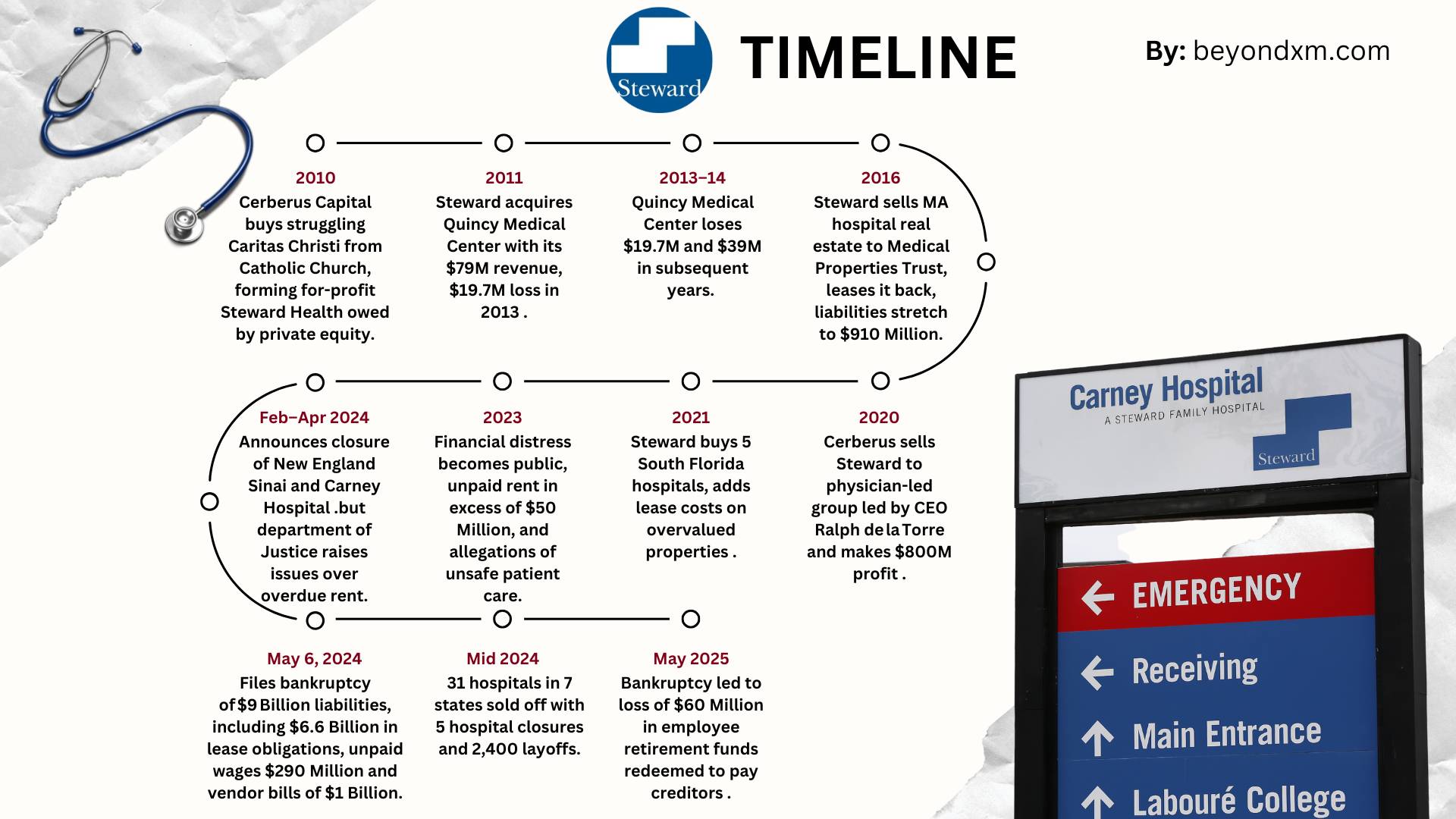
Steward Business Timeline
Steward Health Care, once America's largest private for-profit hospital network, is now a cautionary tale of rapid growth, unchecked leverage, and misaligned incentives, hence making entry into our Hall of Shame for "Blast from the Past".
Dr. Ralph de la Torre, a heart surgeon who spearheaded the company's transition from a non-profit hospital system (Caritas Christi) to a for-profit healthcare network under Cerberus Capital Management, is often hailed as the founder for Steward Healthcare.
Did you know that before becoming an executive, Dr. de la Torre was a leading heart surgeon at Boston's Beth Israel Deaconess Medical Center?
Unique Value Proposition:
Acquisition with Fresh Capital: Cerberus Capital Management acquires the struggling Caritas Christi Health Care, transitioning it into the for-profit Steward Health Care under Dr. Ralph de la Torre.
Strategic Partnerships: Steward quickly expands by acquiring institutions such as Quincy Medical Center and Morton Hospital, funding this growth through innovative sale-leaseback real estate deals.
Operational Profitability: Steward achieves profitability through aggressive cost-cutting, freeing resources for ambitious national expansion.
Did you know that Steward even tried expanding internationally, including partnerships in Malta and Saudi Arabia?
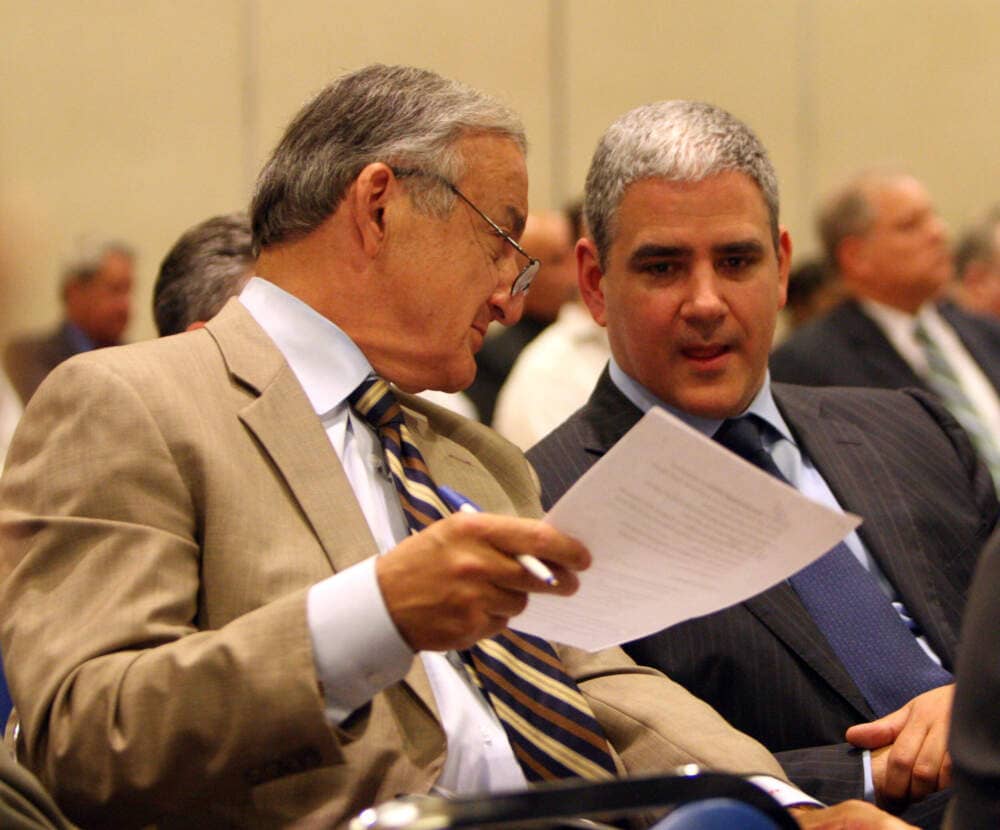
Dr. Ralph de la Torre, then-president and CEO of Caritas Christi, at the final public hearing regarding the sale of the Carney Hospital, Source: wbur.org
Rapid Expansion & the Asset-Light Gamble (2016–2019)
2016–2017: Steward executes a massive $1.25 billion sale-leaseback deal with Medical Properties Trust (MPT), producing nearly $800 million in dividends for Cerberus and insiders.
2017: Acquiring 26 hospitals from Community Health Systems and Iasis, Steward ascends as the largest private, for-profit hospital network, generating approximately $8 billion in revenue.
2018: Steward relocates its headquarters to Dallas, signalling an aggressive expansion strategy heavily reliant on real estate monetisation.
Triggers for Slowdown:
The COVID-19 pandemic triggers a $408 million net loss, exacerbating Steward's precarious financial position.
Steward's leveraged asset-light strategy spirals into significant annual liabilities ($350 million rent plus mounting debt), stretching finances beyond recovery.
Operational cracks emerge: Regulatory investigations surface, highlighting unsanitary conditions and declining patient care standards at multiple hospitals.
Final Collapse:
2023: High-profile incidents including fires, hospital closures, unpaid salaries, and vendor lawsuits, underscore Steward’s operational meltdown.
May 2024: Steward files for Chapter 11 bankruptcy, citing roughly $9 billion in liabilities, significantly impacting 30,000 employees.
June 2025: Legal scrutiny intensifies as litigators claim over $1 billion was improperly diverted to Cerberus and insiders amidst insolvency.
5 Mistakes which turned an $8 Billion empire into a $9 Billion collapse
Asset Light to Asset Blind: Steward's real estate transactions initially fuelled growth, but rent burdens eclipsed operating margins. Monetize assets strategically to enhance, not replace core profitability.
Build Financial Discipline: Steward’s commitments spiraled into unsustainable financial obligations amid unforeseen events like COVID-19. Stress-test strategic leverage under worst-case scenarios before committing.
Don't Shit where you Eat: Massive insider withdrawals amid financial distress triggered regulatory scrutiny for Steward Healthcare. Robust oversight and clear fiduciary duties are critical, especially under private equity ownership.
Build Operational Efficiencies: Declining patient care and safety led to reputational damage and regulatory intervention, in the latest years if Steward. Sustainable growth cannot compromise service quality; the cost of neglect is catastrophic.
Contingency Planning is Crucial: Steward was reactive rather than proactive in crisis, resulting in chaotic restructuring. Build robust "Plan B" strategies, M&A, carve-outs, and restructuring options, well before crises strike.
Subscribe to
Beyond Stack
Join Over 10,000 Readers where we share insight to grow your company, build products. Get access to growth hack pitch decks and more.
Thank you! Your submission has been received!
Oops! Something went wrong while submitting the form.