Did you know that prior to TerraUSD's collapse, Do Kwon quietly transferred 9 billion won (approximately $7 million) to a law firm, anticipating huge legal challenges ahead?

Do Kwon wasn't your typical crypto bro. This was a guy who'd worked at Apple and Microsoft, founded a mesh network startup called Anyfi (which had already raised $1 million), and possessed the kind of technical credentials that made VCs believe anything he'd say.
In January 2018, he co-founded Terraform Labs with Korean entrepreneur Daniel Shin, armed with a white paper that promised to revolutionize payments.
The goal was to create a systme that maintains a $1 peg, not through conventional system, but through sophisticated algorithms that would absorb volatility.
A disaster recipe: They were trying to create stability through instability, value through destruction, and trust through untested algorithms.
🎯They promised: A decentralized, algorithmic stable currency that would revolutionize payments
❌They delivered: A yield-chasing scheme that attracted speculators, not real users
🎯They promised: Real-world adoption through partnerships like Chai (a Korean payments app)
❌They delivered: Fake transaction volume. Do Kwon later admitted to fabricating Chai's blockchain integration
🎯They promised: True decentralization through algorithmic mechanisms
❌They delivered: A system entirely dependent on Terraform Labs' subsidies and market manipulation
By 2019, Do Kwon had landed on Forbes' "30 Under 30" list. The company raised $32 million from crypto heavyweights including Binance, Arrington XRP Capital, and Polychain Capital.
Korean commerce giants like Ticketmonster and travel service Yanolja came aboard as partners. Everything was picture perfect
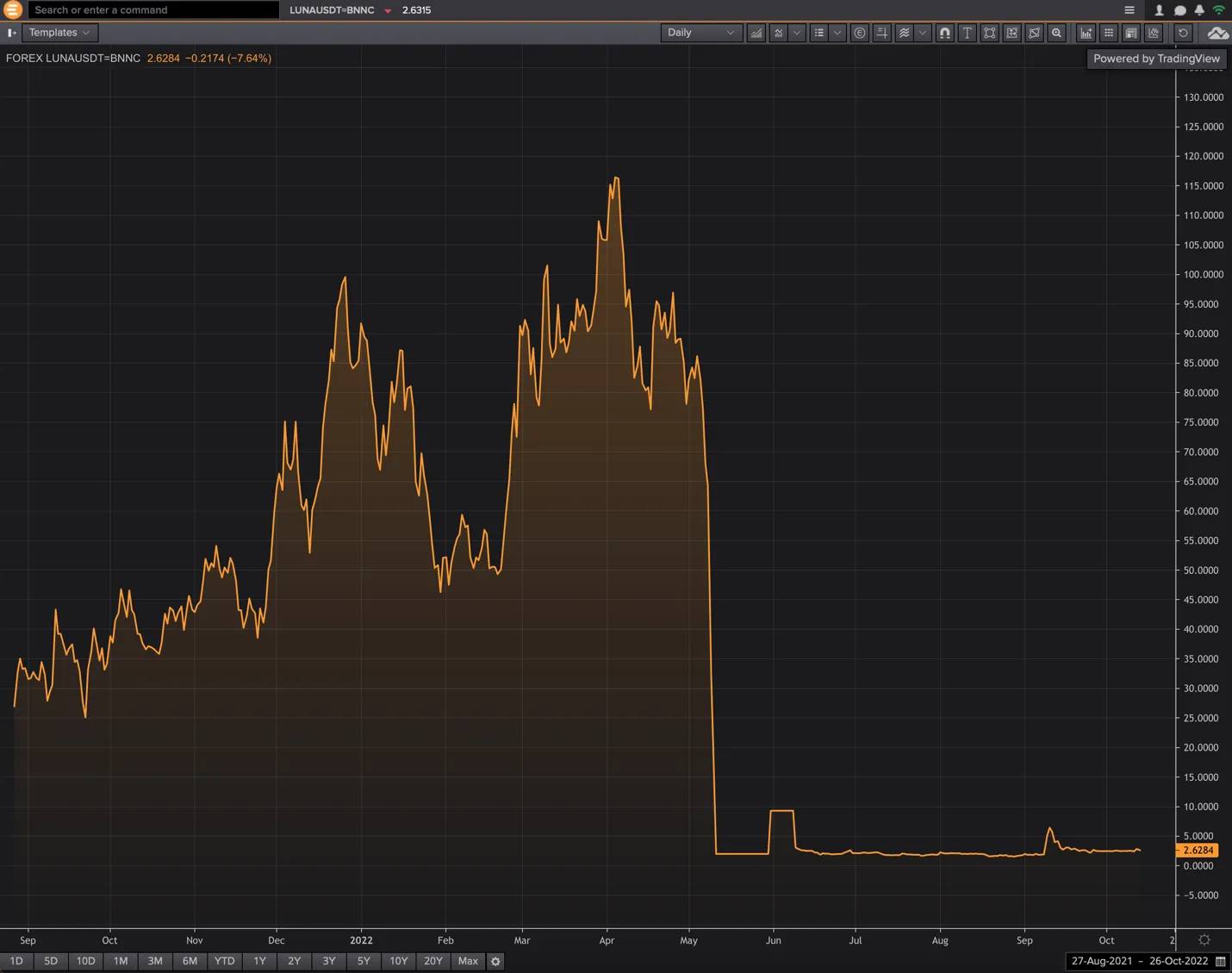
Did you know that Do Kwon's claims about Terra's decentralization were later exposed as complete fabrications?
On May 7, Two large addresses withdrew 375 million UST from Anchor Protocol. Bot monitoring services detected an 85 million UST swap for USDC.
UST's price dropped to $0.985,
While UST was experiencing its death spiral, traditional fiat-backed stablecoins like USDC and USDT barely flinched. Why?
Because they were backed by actual reserves, not algorithmic fluff.
Terra wasn't just a two-token system, it was supposed to be an entire blockchain ecosystem hosting thousands of decentralized applications.
When Terra collapsed:
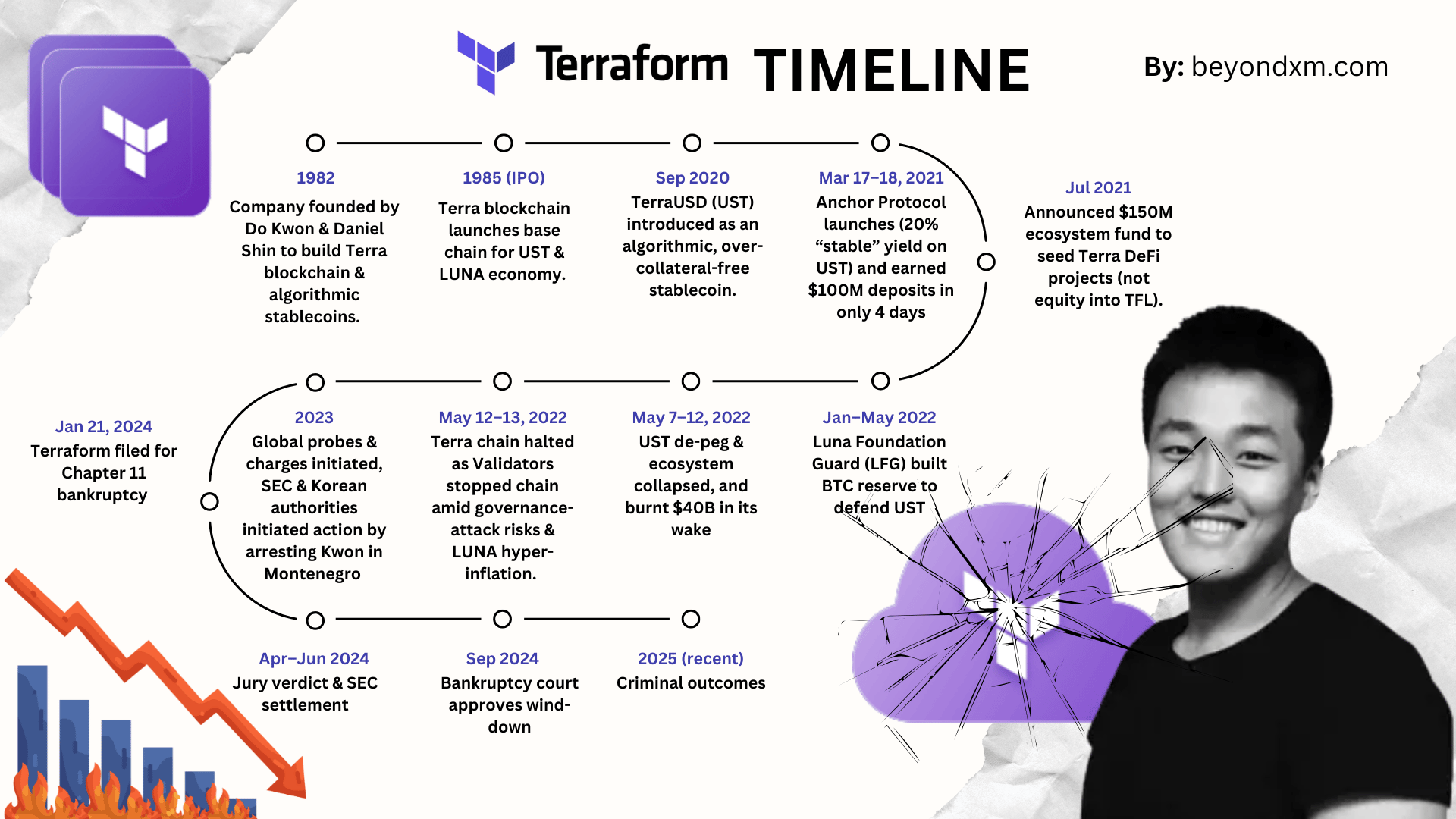
Terra's collapse triggered a cascade of failures throughout crypto, contributing to the bankruptcies of Three Arrows Capital, Celsius Network, and dozens of other firms.
It wasn't just a single company failure; it was a systemic event that proved how interconnected and fragile the crypto ecosystem had become.
Join our growing community of more than 10,000 Business Leaders.
Get access to Growth Hacks, Expert Interviews, and Data-backed Strategies every week, Exclusive Downloadable Templates and Data Bases.